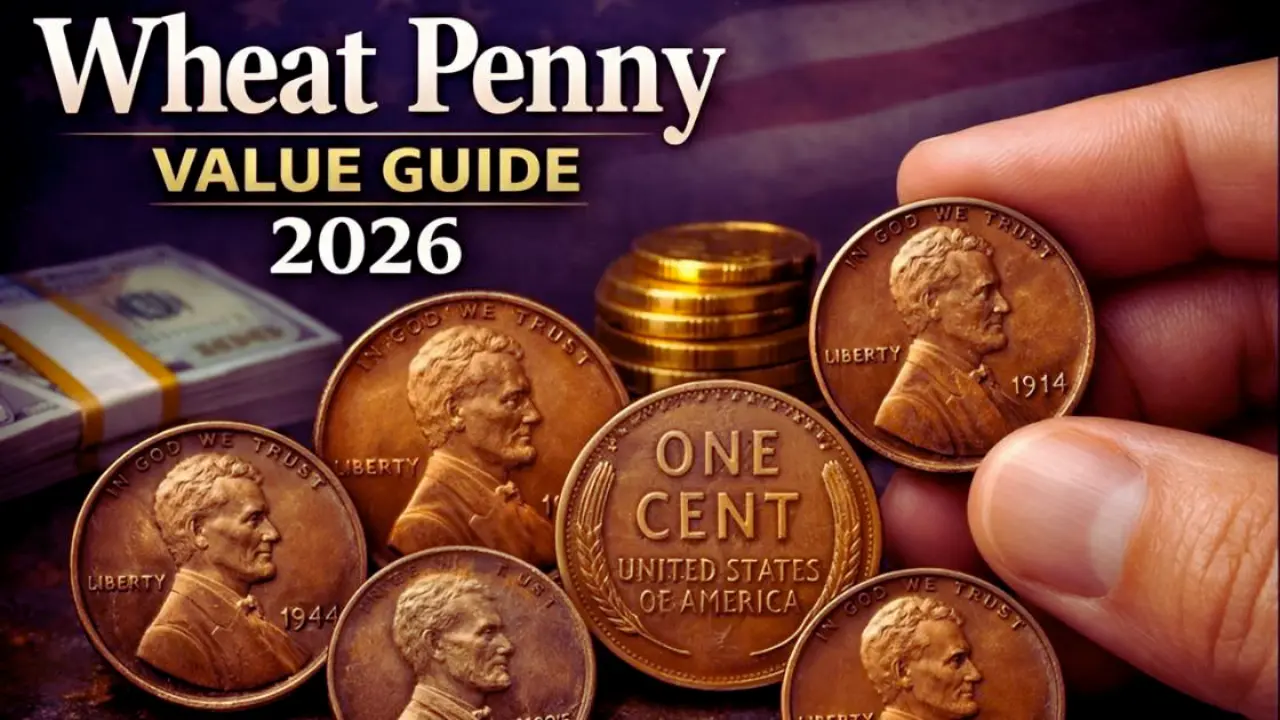
The Wheat Penny Value remains a key focus among today’s coin collectors and small investors because this classic U.S. coin is both affordable and offers a good price. The Wheat Penny is a circulated copper-based circulation coin that attracts entry-level collectors, bulk hoarders, and those seeking long-term value. Today, its condition-based value, interest in metal content, and consistent collector demand make it a highly valuable coin. Its market activity is driven by grading quality, remaining supply, and resale liquidity, not speculation or lore.
Coin Specifications
The Wheat Penny’s value is largely tied to clearly defined physical specifications expected by collectors. The coin has a standard diameter of 19.05 mm, a thickness of approximately 1.52 mm, and a smooth and plain edge. The average weight for copper-dominant cases is 3.11 grams. The obverse features a single portrait design, while the reverse features two wheat ears in the center. These fixed specifications facilitate easy authentication, consistent storage, and accurate valuation when buying, selling, or grading assessments in today’s coin market.

Metal Composition
Wheat penny value is directly influenced by its metal composition, which is primarily copper with small amounts of tin and zinc. Most circulating examples have a copper content exceeding 90 percent, giving the coin both a collectible and genuine metal appearance. This composition provides durability, uniform toning, and long-term stable preservation when stored properly. Metal purity also contributes to baseline value, even in low grades. Investors often consider copper weight when evaluating bulk lots, making composition a meaningful pricing factor.
Rarity and Demand
Wheat Penny value benefits from a unique balance between availability and consistent demand. Although millions of coins are still in circulation, high-quality, visually clear examples are becoming increasingly limited. Affordable entry pricing and widespread recognition among collectors keep demand strong. New collectors seek these coins to build sets, while experienced buyers focus on condition upgrades. This consistent demand supports consistent liquidity, ensuring that well-preserved coins rarely go unsold in the current numismatic marketplace.

Mint Details
Wheat Penny value is influenced by consistent minting standards that support consistent quality assessment. These coins were produced using traditional high-pressure minting techniques, which yield sharp details when the die is fresh. Strike quality varies depending on production efficiency, which impacts lettering clarity and surface smoothness. Mint marks, when present, add another layer of identification without altering the core dimensions. Clear minting characteristics help collectors recognize sharp examples, which directly improves desirability and resale strength in modern coin transactions.
Condition and Grading
Wheat penny value increases significantly with professional-grade condition assessments. Coins are typically evaluated based on wear, surface marks, luster retention, and strike sharpness. Higher-grade examples exhibit minimal edge wear, crisp lettering, and consistent color. Even a slight improvement in grade can result in a noticeable increase in value. Certified grading provides pricing confidence, especially for buyers seeking investment-grade pieces. Coins stored in protective holders maintain condition stability, helping them maintain value over the long term in a competitive resale environment.

Market Value
Wheat Penny values currently span a wide price range based on grade, appearance, and overall preservation. Circulated examples typically trade at modest prices, while uncirculated or sharply striped coins command substantial premiums. Market pricing remains active due to consistent collector turnover and steady online demand. Value stability is supported by a recognizable design and low entry costs. Pricing remains transparent, allowing buyers and sellers to transact fairly without relying on speculation or external market signals.
Investment Potential
Wheat Penny values offer practical investment potential by gradually increasing rather than experiencing rapid price spikes. The coin’s affordability allows for diversification across multiple grades or quantities. Long-term value growth is supported by a lack of high-quality supply and continued collector interest. Liquidity remains strong, providing easy exit opportunities. Despite not being speculative, wheat pennies offer stability, metal-backed assurance, and collector-driven demand. This makes them ideal for conservative investors looking for tangible assets whose market behavior is predictable.

Conclusion: Wheat Penny Value
The Wheat Penny continues to attract attention due to its clear specifications, copper composition, controlled rarity, and reliable market demand. With established grading standards and transparent pricing, collectors can confidently assess quality and value. Market value remains stable regardless of condition, while higher-grade coins show greater appreciation potential. For both collectors and investors, the Wheat Penny is affordable, liquid, and long-lasting. Its balanced combination of physical substance and collector demand ensures its place in today’s numismatic market.