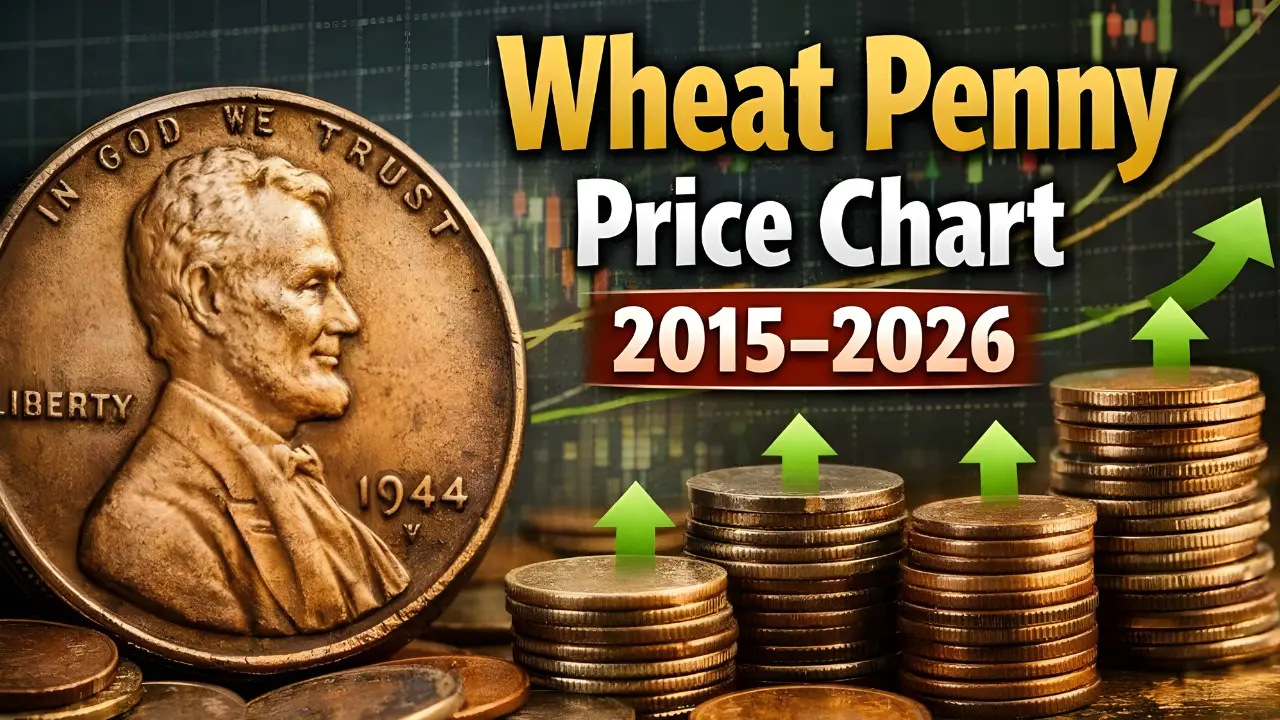
Wheat Penny Price Chart 2015 to 2026: Wheat pennies, officially known as Lincoln Wheat cent coins, were minted between 1909 and 1958 and are one of the most collected coins in American numismatics. These copper coins feature Abraham Lincoln on the obverse and two stalks of wheat on the reverse, earning them their popular nickname. Over the past ten years, from 2015 to 2026, wheat penny prices have fluctuated significantly due to factors such as copper prices, collector demand, coin condition, and rarity.
Historical Price Trends
Between 2015 and 2020, prices for wheat pennies in circulated condition remained fairly stable, typically ranging from 3 to 15 cents per coin. However, rarer dates and mintmarks, such as the 1909-S VDB, 1914-D, and 1922 plain varieties, saw a steady increase during this period. The copper melt value, which remained around 2 cents per penny during these years, set a baseline price floor for all wheat pennies, regardless of condition. Collectors during this period focused primarily on building complete sets, which increased demand for special dates and high-grade examples, while common dates remained affordable for entry-level collectors.
Market Changes from 2020 to 2023
The period from 2020 to 2023 saw significant market changes impacting the value of wheat pennies. The COVID-19 pandemic initially disrupted coin shows and in-person trading but also sparked renewed interest in coin collecting as a hobby during lockdowns. Common-date wheat pennies in circulated condition rose slightly, ranging from 5 to 20 cents, while special dates in mint-state condition saw significant increases, with some examples doubling or tripling in value. The copper market also experienced fluctuations during this period, impacting the intrinsic metal value of these coins.
Current Market Analysis
By 2026, the wheat penny market has become a more attractive collecting segment with clearer pricing patterns. Common dates in average circulated condition now trade between 8 and 25 cents, reflecting both inflation and continued collector interest. The value of semi-key dates, such as the 1931-S and 1924-D, has remained stable in the $100 to $300 range for fine to very fine grades. The greatest increase has been in high-grade examples, with Mint State coins graded MS-65 or higher commanding a significant premium. Professional grading is becoming increasingly important, with certified coins often selling for 50 to 100 percent more than raw examples of equivalent quality.

Key Date Performance
Key Date Wheat pennies have consistently outperformed common dates from 2015 to 2026. The price of the 1909-S VDB, considered the finest Wheat Penny, has risen from approximately $1,500 in mint state in 2015 to over $3,000 for MS-63 examples in 2026. The 1914-D and 1922 plain varieties have also seen similar increases, with examples now selling for $200 to $400 on average, compared to $150 to $300 a decade ago. Misprinted coins and varieties, such as doubled dies and repunched mint marks, have also attracted considerable attention from experts, and some rare mistakes have fetched four-digit prices at auction.
Investment Considerations
Investing in wheat pennies requires careful consideration of more than just price appreciation. Grade matters significantly, as the difference between an MS-64 and an MS-65 grade coin can be worth thousands of dollars. Authentication and certification by reputable grading services like PCGS or NGC adds credibility and liquidity to valuable specimens. Collecting a variety of coins—balancing common dates, semi-precious coins, and genuine rare coins—can be both fun and financially rewarding. Storage and preservation are crucial, as mishandling can permanently damage coins and reduce their value.
Future Price Prediction
After 2026, wheat penny prices will continue to trend upward slowly, driven by limited supply and the transfer of collections from generation to generation. As older collectors reduce collections or pass them on to heirs, the market may see periodic influxes of coins, which could stabilize prices in the short term. However, long-term fundamentals remain strong, with new collectors entering the hobby and existing collectors upgrading their sets. Special dates and high-grade specimens will outperform common dates, as they always have.
Conclusion
From 2015 to 2026, the wheat penny market has shown resilience and growth, benefiting knowledgeable collectors who focus on quality and rarity. While common dates remain an affordable entry point for new collectors, special dates and high-grade specimens have proven to be strong performers. Whether collecting for fun, investment, or both, Wheat coins are easy to find and have a historical significance that few other coins can match. As these coins age and decline into higher grades, their appeal for generations to come is assured, making them a good idea for anyone interested in American numismatics.