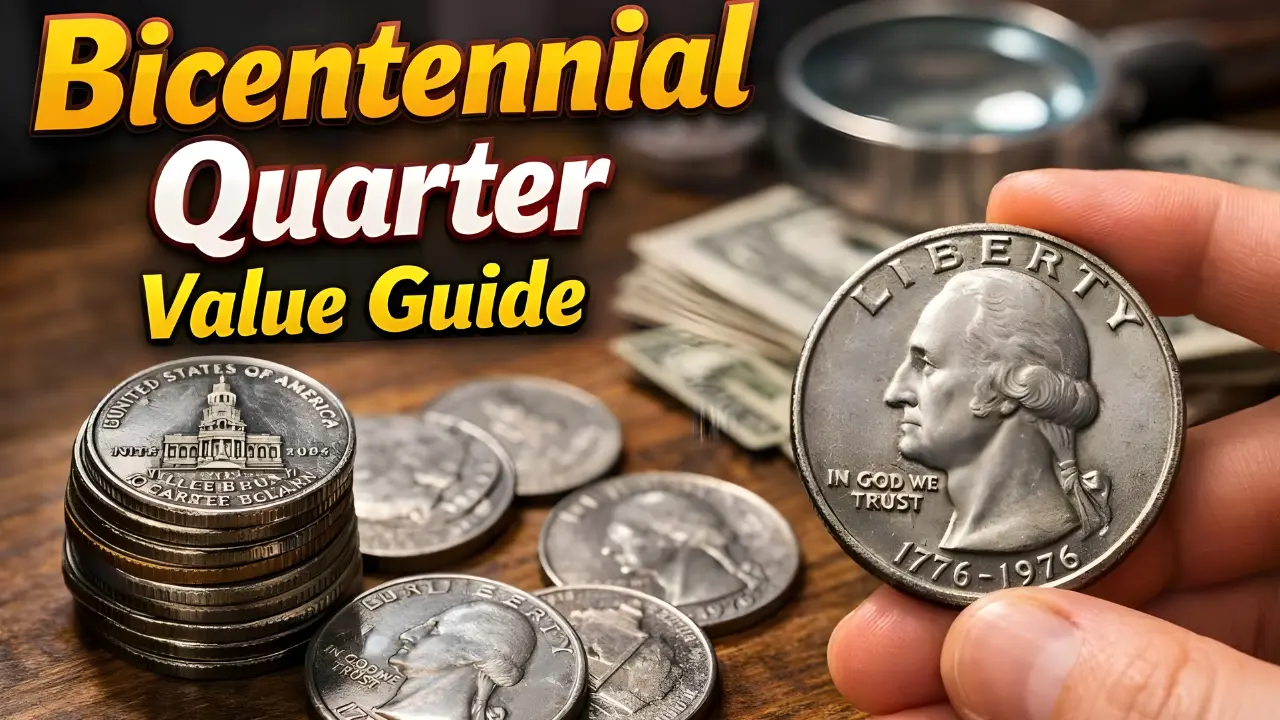
Rare 1776-1976 Bicentennial Quarter Value Guide: The rare 1776-1976 bicentennial quarter values are attracting the attention of coin collectors and investors throughout the United States. This commemorative quarter, minted to celebrate the 200th anniversary of American independence, falls into the Modern Commemorative category and features a distinctive dual-date design. It appeals to both entry-level collectors and experienced numismatists seeking coins with strong visual identity and historical significance. Currently, market demand is steady, with some high-grade and error specimens fetching premium prices well above face value.
Coin Specifications
The rare 1776-1976 Bicentennial Quarter measures 24.3 millimeters in diameter and weighs exactly 5.67 grams. The obverse features the familiar portrait of George Washington, while the reverse features a portrait of Jack L. The obverse features a Colonial Drummer Boy design created by Ahr. The standard single year found on regular quarters has been replaced by a dual date, “1776-1976.” The edge features a reading that matches standard U.S. quarter production. These physical specifications remain consistent across regular circulation strikes, leaving condition and mint marks as the primary value differentiators for collectors to evaluate individual pieces.

Metal Composition
The rare 1776-1976 Bicentennial quarter exists in two different metal compositions. The standard circulation version features a clad composition of 91.67% copper and 8.33% nickel bonded to a pure copper core. A special 40% silver version was also created specifically for collector sets, consisting of 40% silver and 60% copper. The silver variety varies significantly in weight, weighing approximately 5.75 grams. Identifying the silver composition requires either a scale or acid testing, as both versions appear identical to the untrained eye.
Rarity and Demand
The demand for the rare 1776-1976 Bicentennial quarters is largely due to their rarity in condition rather than their low mintage numbers. Over 1.6 billion clad quarters were produced at the Philadelphia and Denver facilities, making circulated examples common. While finding specimens with a grade of MS-67 or higher is a real challenge, Certified Population Reports indicate that very few coins reach top-tier grades. The 40% silver proof versions and San Francisco Mint strikes attract the most collector interest. Error coins, including doubled die reverse varieties and off-center strikes, are truly rare and command significant demand among specialist collectors.

Minting Details
The rare 1776-1976 Bicentennial quarter was produced at three U.S. Mint facilities. The Philadelphia Mint produced approximately 809 million clad business strikes with no mint mark. The Denver Mint produced approximately 860 million clad examples bearing a “D” mint mark. The San Francisco Mint produced both clad and 40% silver versions with an “S” mark, intended only for proof and collector sets. San Francisco also produced uncirculated silver versions for special mint sets. Silver strikes with an “S” mint mark command the highest collector premiums of all Bicentennial quarter varieties currently on the market.
Condition and Grading
The value of rare 1776-1976 Bicentennial quarters depends largely on professional grading. Circulated examples graded VF-20 to EF-45 typically show light wear on Washington’s cheekbone and the drummer’s uniform detail. Mint State coins graded MS-63 show light contact marks but retain their overall luster. Coins reaching MS-65 look good with minimal marks. Proof versions graded PR-69 or PR-70 Deep Cameo are the best in this series. Third-party grading from a service like PCGS or NGC significantly increases buyer confidence and resale value for premium examples.

Market Value Potential
Rare 1776-1976 Bicentennial quarters offer real investment appeal in specific grade ranges and varieties. High-grade MS-67 and MS-68 clad examples have consistently appreciated in value due to their low certified populations. Silver Proof examples in PR-70 Deep Cameo offer stable long-term value given their limited remaining populations in perfect condition. Error varieties, especially doubled dies and off-center strikes, show the greatest upside potential in this series. Collectors building type sets or modern memorabilia portfolios find this quarter a logical and affordable entry point, with significant appreciation potential over five to ten years.
Conclusion: Rare 1776-1976 Bicentennial Quarter Value Guide
The value of rare 1776-1976 Bicentennial quarters is determined by a combination of mint mark, metal composition, grade, and variety. With standard clad examples with face values in circulated condition and top-grade certified specimens reaching hundreds of dollars, the range is large enough to suit every budget. 40% silver versions and coins with confirmed errors add depth to the series for the advanced collector. As a modern commemorative coin with striking visual appeal and a patriotic theme, this coin is one of the most recognizable and actively collected coins in American numismatics today.