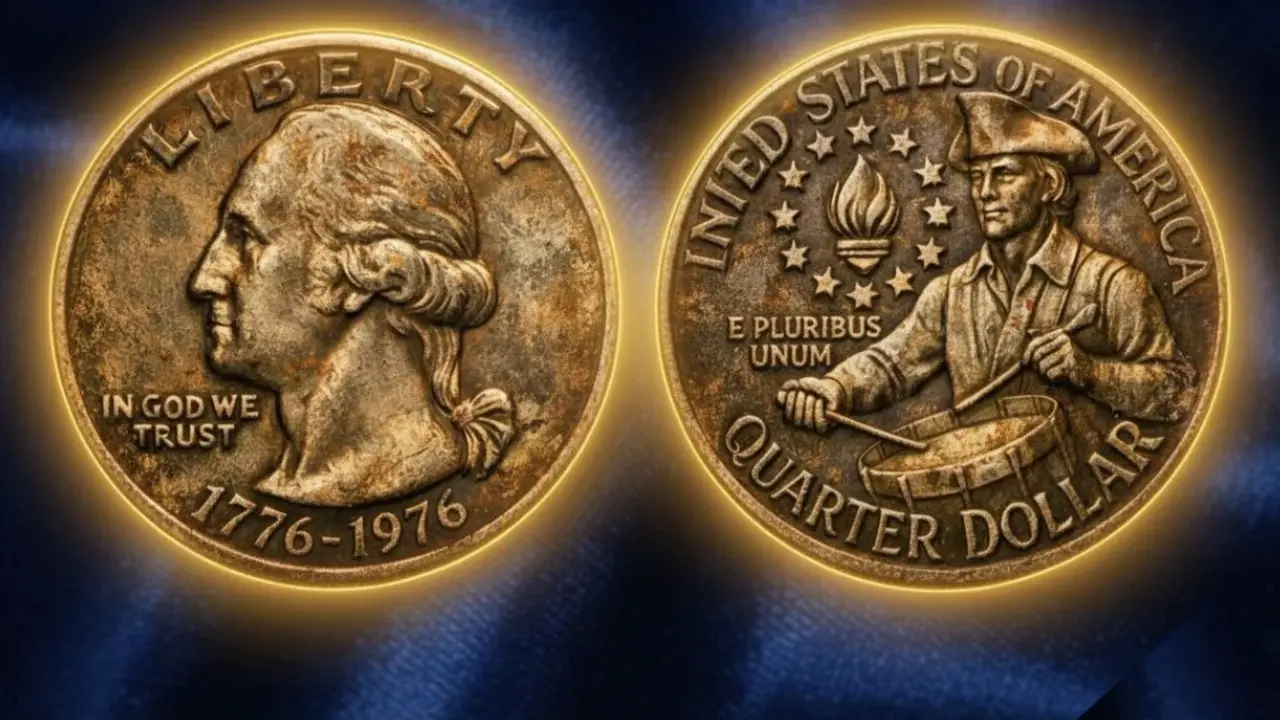
Bicentennial quarters’ value is a significant topic for collectors and investors interested in modern United States commemorative coins, particularly the 1776-1976 quarters, minted to commemorate the 200th anniversary of American independence. This coin belongs to the commemorative circulation category, yet it is widely collected as a modern numismatic material, including both proof and business strike coins. Bicentennial quarters are highly traded among hobbyists and investors, and their value in the current market reflects the demand for high-grade examples, which can fetch a substantial premium over face value in today’s numismatic marketplace.
Coin Specifications
Bicentennial quarters’ value depends largely on well-established specifications that influence collector interest and price. Each quarter measures exactly 24.3 millimeters in diameter and weighs 5.67 grams, in accordance with standard quarter dimensions. The edge features a reeded texture, and this coin was produced in large quantities at multiple U.S. Mint facilities. All Bicentennial quarters have a double date of “1776-1976” on the obverse, distinguishing them from regular Washington quarters. These precise physical details are essential for determining condition and authenticity.
Metal Composition
The value of Bicentennial quarters is linked to their unique metal composition, which occurs in two main ways. Most business strike examples are made from a clad sandwich, with an outer layer of 75 percent copper and 25 percent nickel bonded to a pure copper core. Special collector proof and silver varieties are produced with a 40 percent silver content, giving them a distinct composition and appeal. The varying metallic content of each type directly impacts intrinsic value; 40 percent silver examples often sell for a premium on the secondary market.

Rarity and Demand
The value of Bicentennial quarters is influenced by both rarity and demand in the modern coin collecting community, where specific varieties and high grades are highly sought after. While the overall mintage of Bicentennial quarters was high, some mint marks or finishes are less common in preferred condition. Coins certified in top grades by reputable grading services are in high demand, and collectors often seek coins with full original luster and minimal wear. The premium demand for near-perfect proofs and non-circulation coins increases their valuations.
Minting Details
The value of Bicentennial quarters involves understanding where and how these coins were minted, which impacts numismatic desirability. In 1975 and 1976, the U.S. Mint produced these quarters at its Philadelphia, Denver, and San Francisco facilities. Business strike coins bear either a “P” or “D” mint mark, while San Francisco proof coins typically bear an “S” mint mark. Silver proof coins were specially struck from 40 percent silver, making them more distinctive. Minting details play a significant role in both collector preferences and the relative valuations given to different specimens.
Condition and Grading
Condition and professional grading results have a significant impact on the value of Bicentennial quarters, as these factors determine collectible status and price range. Collectors often refer to the standard 70-point scale, where coins graded MS65 or higher are considered non-circulation, and PR69 or PR70 demonstrate a nearly perfect proof surface. Coins with original cartwheel luster, sharp strike detail, and no contact marks automatically command higher prices. Condition determines value, and even minor imperfections can significantly vary the price of individual specimens.

Market Value
Bicentennial quarters’ values reflect today’s market prices for both common and premium coins, and prices vary greatly depending on type and grade. Commonly circulated business strikes often trade at slightly above face value, while uncirculated high-grade and certified proofs command significantly higher prices. Silver 40 percent proof and top mint state coins regularly sell at premiums due to metal content and collector demand. Market values can fluctuate, and coins that look very good or have a high luster can fetch significantly higher prices than average in the broader coin market.
Investment Potential
Bicentennial quarters’ values involve an assessment of investment potential, where numismatic investors consider both short-term and long-term factors. While modern commemorative coins don’t always appreciate rapidly, high-grade coins with low availability and better preservation often exhibit stable value retention. Collectors who target 40% silver proof and top-grade coins may find more consistent interest from the secondary market. The ability to hold coins for a long time with minimal risk of deterioration increases their appeal as a solid alternative asset.
Collector Appeal
The value of Bicentennial quarters is further enhanced by their collector appeal, stemming from the coin’s iconic design and widespread recognition. The obverse features the familiar portrait of Washington, while the reverse features a Colonial drummer and a Victory torch surrounded by thirteen stars, making it instantly recognizable. Many hobby businesses purchase complete sets of strikes, proofs, and silver proofs, maintaining a steady demand for high-quality pieces. Collector appeal remains a major driver of value, especially for specimens whose original surfaces remain untouched by circulation.

Future Outlook
The value of Bicentennial quarters will continue to rise as the numismatic market adjusts to both supply and demand factors. Interest in well-graded modern commemorative coins remains strong, and as collectors increasingly focus on rarity, the value of top-grade examples is likely to remain or increase. Coins with high silver content, in particular, may attract investors due to their metal value as well as numismatic merit. The future outlook remains positive, although, like all collectible coins, their value will fluctuate with broader market sentiment and collector interest.
Conclusion: Bicentennial Quarters Value
The Bicentennial quarters’ value is driven by a combination of well-established specifications, attractive metal composition, and consistent collector demand, which contribute to variable pricing in the marketplace. As a commemorative coin with numerous minting variations and excellent visual appeal, it is of interest to both hobbyists and investors. Current market value reflects the coin’s condition, rarity, and type in high grades, making well-graded examples particularly desirable. For those looking for modern U.S. coins, Bicentennial quarters offer a blend of collector appeal and measurable investment potential that deserves attention.