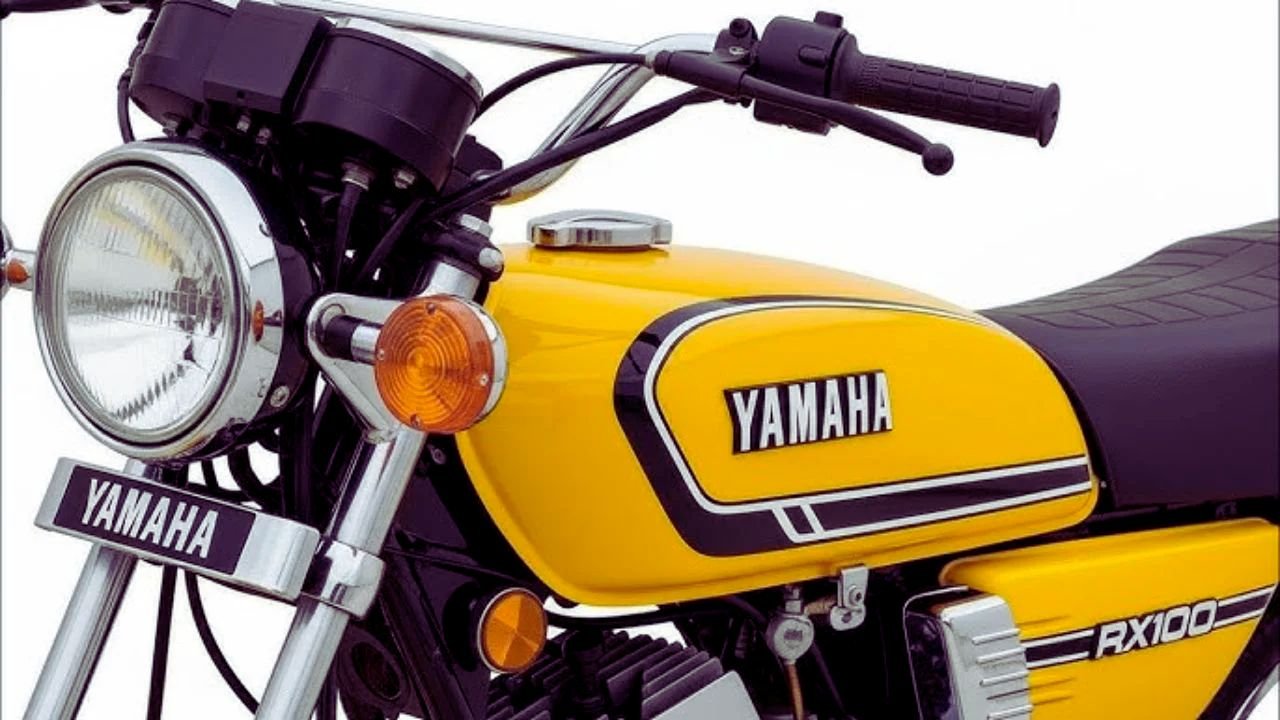
The Yamaha RX100 was one of the most popular motorcycles sold in India. Launched by Yamaha Motor Company in 1985, the bike quickly became a favorite among riders seeking performance, simplicity, and a thrilling ride. The RX100 was known for its distinctive sound and powerful performance at a time when most motorcycles in India were low-powered and basic. For many, the Yamaha RX100 was more than just a bike—it symbolized youthful freedom.
In the late 1980s and 1990s, commuter bikes with engines under 125cc dominated motorcycle sales in India. The Yamaha RX100 stood out with its 98cc engine, which produced 11 horsepower—significantly more than the typical bikes of the time, which averaged 7-8 horsepower. This performance made the RX100 popular on Indian roads.
Yamaha RX100 Design and Build
The Yamaha RX100’s design was simple yet functional. It featured a steel tubular frame that provided strength and balance. The fuel tank had a classic round shape and minimal graphics, giving it a timeless look. With a dry weight of approximately 95 kg, the RX100 was lighter than many of its competitors. This low weight, combined with a peppy engine, contributed to its impressive speed.
The bike featured front telescopic suspension and rear dual shock absorbers, providing a comfortable ride on the varied roads of India at the time. The seat was long and flat, comfortably seating two riders. The headlamp and indicators were basic but functional, reflecting the RX100’s focus on performance rather than luxury.

Engine Specifications and Performance
The heart of the Yamaha RX100 was its single-cylinder, air-cooled, two-stroke 98cc engine. This engine produced 11 horsepower at around 8,000 rpm and a peak torque of around 10.05 Nm. In the mid-1980s, these figures were excellent for a bike under 100cc, making the RX100 one of the fastest bikes in its segment. Its 4-speed gearbox was smooth and responsive, giving riders precise control over power delivery.
The RX100’s top speed was around 100–105 km/h, a figure that still impresses riders today. According to reports from real owners, the bike could accelerate from 0 to 60 km/h in around 5.5–6 seconds. These figures made it a favorite among speed lovers, and it was often featured in the college biking community.
Handling and Ride Experience
A key feature of the Yamaha RX100 was its handling. The lightweight chassis made the bike highly responsive, allowing it to corner confidently at speed. Riders often praised its balance and agility, especially on urban and winding roads. Despite lacking modern features like disc brakes or advanced suspension, the RX100 offered a surprisingly stable ride.
However, its sporty setup resulted in a firm ride quality. On rough roads, slight jolts were more noticeable than on modern commuter bikes, but many enthusiasts considered this a strength of the bike. The steering was sharp, and the road feedback was direct, making for an engaging experience rather than a comfortable ride.

Braking and Safety Features
The Yamaha RX100 used drum brakes at both the front and rear, which were standard for the time. The drum brakes measured approximately 130 mm in diameter at the front and 110 mm at the rear. Although these brakes required careful modulation at higher speeds, they were reliable in everyday riding conditions. Riders often learned to “feather” the brakes to gain better control during sudden stops.
Unlike modern motorcycles, the RX100 lacked advanced safety technologies like ABS (anti-lock braking system) or combined braking. Riders relied entirely on skill and experience to control the bike, especially when riding at high speeds. For many owners in the 1990s, mastering the RX100 became a rite of passage for serious riders.
Fuel Efficiency and Ownership Cost
The Yamaha RX100’s fuel efficiency varied depending on riding style. On average, owners reported mileage between 35 and 42 km/l. This was reasonably economical for a performance-oriented bike of its time, considering that most commuter bikes achieved around 45–55 km/l. The 10-liter fuel tank offered a practical range of approximately 350–420 km on a full tank.
The RX100’s maintenance costs were also reasonable. Basic service intervals included spark plug checks, carburetor tuning, and chain adjustment. Because the RX100 had a two-stroke engine, owners were required to mix engine oil with petrol in a specific ratio (usually 25:1 or 30:1)—a common practice for two-stroke bikes. This extra step was part of the engine’s character, but it needed attention for optimal performance.

Value and Collectibility Today
Although discontinued in 1996, the Yamaha RX100 remains highly collectible. In the current vintage motorcycle market in India, a well-restored RX100 can fetch anywhere from ₹40,000 to ₹90,000 or more, depending on condition, rarity, and originality. Original parts like the carburetor, side panels, and wheels are highly coveted by collectors, sometimes fetching premium prices.
Owning an RX100 today is both a nostalgic experience and an emotional investment. Riders appreciate the engine’s mechanical purity, its unique exhaust note, and the connection between rider and machine that modern bikes often lack.
Final Words
The Yamaha RX100 was more than just a motorcycle; it was a cultural icon in India. With its powerful 98cc engine, lightweight design, and powerful performance, it changed expectations for two-wheelers in the Indian market. Technology may have advanced, but the RX100’s story remains etched in the hearts of enthusiasts.
For anyone who yearns to be a part of motorcycling history, the Yamaha RX100 remains a cherished classic—a machine meant not just to be ridden but to be felt.