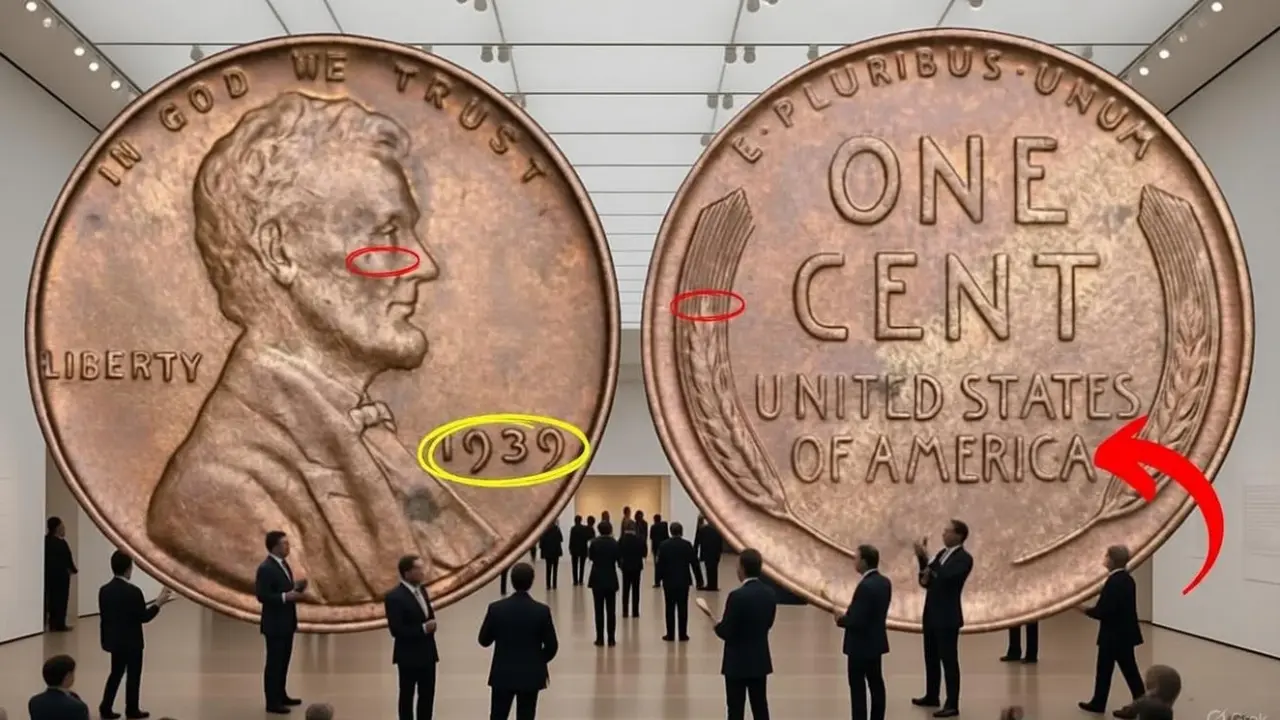
The Wheat Penny Price Chart 1909–1958 provides the market value of Lincoln Wheat Cents issued between 1909 and 1958. This is a classic modern U.S. coin series popular with both novice and advanced collectors. These small copper coins are classified as circulation coins and are widely collected based on their date and mintmark. Their affordability, historical appeal, and the presence of rare dates make them highly sought-after and can fetch hundreds or even thousands of dollars depending on condition.
Coin Specifications
The Wheat Penny measures 19.05 mm in diameter and weighs approximately 3.11 grams for most issues between 1909 and 1958. The coin features a portrait of Lincoln on the obverse and two wheat stalks on the reverse. It has a plain edge and a thickness of approximately 1.52 mm. Standard issue pennies were produced for circulation and were struck in large quantities, with mintages often ranging from several million to over 1 billion coins in some years.

Metal Composition
Most wheat pennies struck from 1909 to 1942 and again from 1944 to 1958 are composed of 95% copper and 5% tin and zinc. Each of these coins contains approximately 2.95 grams of copper. The 1943 issue is a notable exception, made of zinc-coated steel and weighing approximately 2.7 grams. The high copper content in most series gives them collector appeal, as the intrinsic metal value and traditional composition make these coins desirable in both circulated and uncirculated grades.
Rarity and Demand
Wheat pennies remain in high demand due to their large collector base and availability in both common and rare dates. Commonly circulated coins often sell for between $0.05 and $0.50, while well-preserved coins can sell for $1 to $10. Special dates and occasional mint errors can command prices ranging from $50 to over $5,000, depending on condition. The wide price range shown in the Wheat Penny Price Chart 1909–1958 reflects the strong interest among collectors who build complete sets or seek out superior-grade coins.

Minting Information
Wheat pennies were minted at three main mints: Philadelphia, Denver, and San Francisco. Philadelphia coins bear no mintmark, while Denver uses a “D” and San Francisco uses an “S.” Annual mintages varied greatly, with some issues producing over 1 billion coins, especially during peak circulation years. Issues with lower mintages, sometimes as low as 10 million pieces, are more desirable to collectors. The combination of multiple mints and varying production numbers adds depth and complexity to the wheat penny collecting market.
Condition and Grading
Condition is the most important factor in determining value in the 1909–1958 Wheat Penny Price Chart. Coins are graded on a scale from Poor (P-1) to Mint State (MS-70). Heavily worn coins with only faint details visible may sell for a few cents, while Mint State coins with sharp details and original luster can sell for $20 to $200 or more. High-grade coins, graded MS-65 or higher, are particularly sought after because they are well-preserved examples of coins from the period of circulation.

Market Value
All grade levels of the Wheat Penny are currently in steady demand in the market. Commonly circulated coins from the 1940s and 1950s typically fetch $0.05 to $0.25 per coin. Coins in very good condition can sell for $0.50 to $3. Non-circulation coins often reach $5 to $25, depending on the date and mint mark. Rare key-date coins and error varieties can fetch over $1,000 in high grade. These values form the core of any Wheat Penny price chart 1909–1958 used by collectors and investors.
Investment Potential
Wheat pennies have good investment potential due to consistent collector demand and the fact that few high-grade examples remain. While commonly circulated coins may experience slower price growth, higher-grade coins and key dates have shown greater gains. The entry cost is low, with many coins available for less than $1, allowing newcomers to gradually build a collection. Premium examples, especially those graded MS-65 or higher, often appreciate significantly, making them attractive to long-term collectors seeking both affordability and potential value growth.

Conclusion: Wheat Penny Price Chart 1909–1958
The Wheat Penny Price Chart 1909–1958 highlights a classic copper coin series with strong collector demand, clear specifications, and a wide market value range. With a 19.05 mm size, 3.11 gram weight, and a mostly 95% copper composition, these coins are easy to find even for beginners, with rare issues fetching thousands. Current prices range from a few cents for commonly circulated coins to four figures for special dates in top grades, making this series attractive to both collectors and long-term investors.
