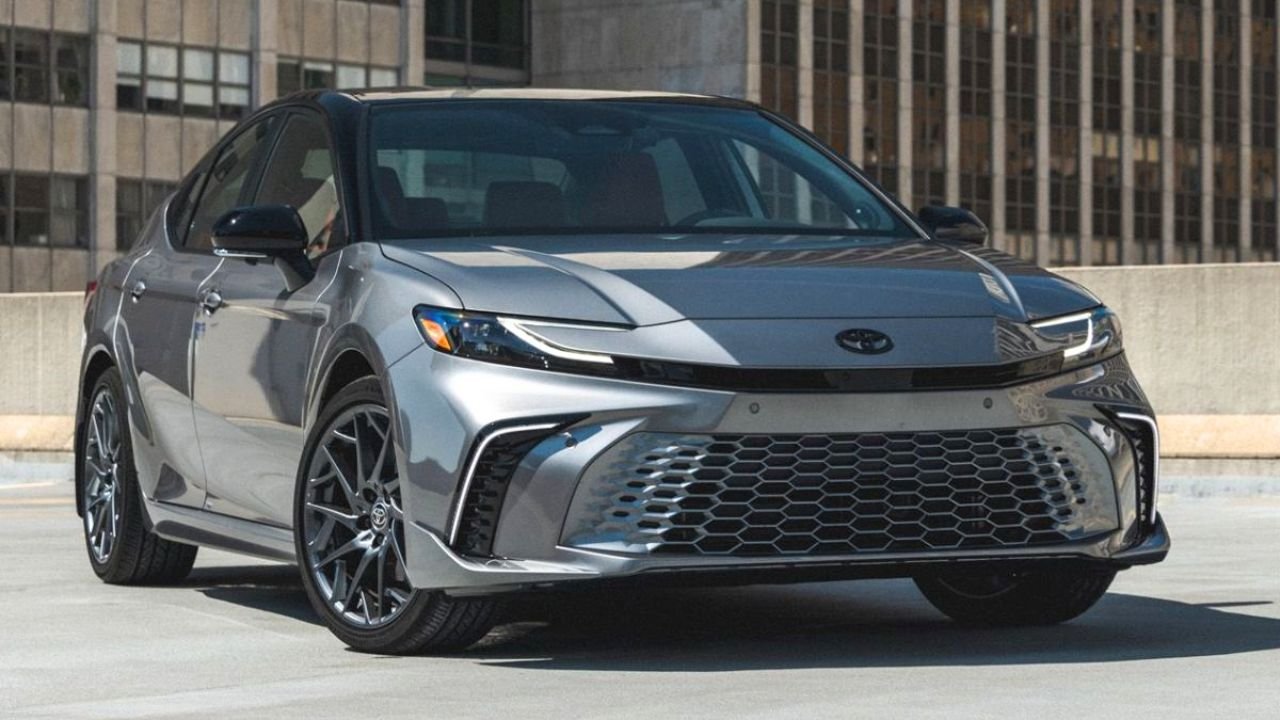
The 2026 Toyota Camry is a mid-size premium sedan that falls in the executive and upper-family car segments. It is designed for buyers who value comfort, refinement, reliability, and long-term use. It primarily targets urban professionals, families upgrading from compact sedans, and users who prefer a smooth petrol-hybrid driving experience over SUVs. In the current market, the Toyota Camry remains relevant due to its strong hybrid efficiency, spacious cabin, advanced safety technology, and low running costs, making it a practical choice for daily commuting as well as long-distance highway travel.
Engine and Performance
The Toyota Camry is powered by a 2.5-liter four-cylinder petrol engine paired with a robust hybrid electric system. The petrol engine produces approximately 176 horsepower, while the electric motor adds approximately 118 horsepower, for a total system output of approximately 218 horsepower. Power is sent to the front wheels via an e-CVT automatic gearbox, which focuses on smooth acceleration rather than sharp shifts, resulting in a quiet and smooth driving experience.
In real life, the Toyota Camry feels agile enough to overtake in the city and cruise on the highway without any hassle. The electric motor helps with low-speed driving, allowing for quiet movement in traffic, while the petrol engine handles the task smoothly at higher speeds. The suspension setup is tuned for comfort, absorbing bumps well, and the steering remains light and predictable, making the sedan easy to drive even in crowded urban environments.

Mileage and Efficiency
The Toyota Camry stands out for its fuel efficiency, especially considering its size and power output. The strong hybrid system allows the car to operate in electric-only mode at low speeds, significantly reducing fuel consumption in stop-and-go traffic. Claimed fuel economy is approximately 25 km/L, which is quite high for a mid-size luxury sedan with a petrol engine.
In real-world use, owners can expect fuel efficiency between 20 and 23 km/L, depending on driving style and traffic conditions. Optimized engine load and regenerative braking ensure excellent highway efficiency. This high mileage translates into lower fuel consumption over time, making the Toyota Camry a cost-effective option for users who need to travel frequently throughout the month.
Dimensions and Comfort
The Toyota Camry boasts large dimensions, which directly enhance passenger comfort and road presence. It measures approximately 4,885 mm in length, 1,840 mm in width, and 1,455 mm in height, with a wheelbase of approximately 2,825 mm. These proportions offer excellent rear legroom and shoulder space, making it ideal for buyers with a driver.

Inside the cabin, the Toyota Camry focuses on premium comfort with soft-touch materials, well-cushioned seats, and a wide seating layout. The rear seats offer ample thigh support and comfortable recline, while the suspension ensures minimal discomfort on rough roads. The cabin’s insulation is robust, reducing road and engine noise and significantly improving comfort on long-distance journeys.
Safety and Technology
The Toyota Camry comes with a comprehensive safety package, including multiple airbags, ABS with EBD, vehicle stability control, and traction control as standard. Advanced driver assistance systems like adaptive cruise control, lane-keep assist, blind-spot monitoring, and autonomous emergency braking further enhance on-road safety, especially when driving on highways and in heavy traffic.
In terms of technology, the Toyota Camry features a large touchscreen infotainment system with smartphone connectivity, a digital instrument cluster, and a premium audio setup. Features like dual-zone climate control, powered seats, wireless charging, and ambient lighting enhance everyday use. The interface is designed for ease of use, focusing on functionality rather than unnecessary complications.

Pricing and Ownership
The Toyota Camry is positioned as a premium sedan and is priced accordingly. Its ex-showroom price in India is approximately ₹46 lakh. Although its initial price is higher than non-hybrid sedans, the long-term ownership benefits help offset the investment. The hybrid system significantly reduces fuel costs, especially for city users with heavy daily use.
The ownership experience is one of the Toyota Camry’s biggest advantages. Toyota’s reputation for reliability, combined with low maintenance requirements and long service intervals, keeps running costs under control. The hybrid battery comes with long-term warranty coverage, and its durability has proven strong in real-world conditions, making the Toyota Camry a stress-free car to own for many years.
Conclusion
The 2026 Toyota Camry offers a balanced package of excellent performance, excellent fuel efficiency, spaciousness, and advanced safety features, making it a strong choice in the premium sedan segment. Its hybrid powertrain delivers smooth driving and low running costs, while a well-designed cabin and reliable ownership experience enhance long-term value. For buyers seeking comfort, efficiency, and reliability without sacrificing the luxury of an SUV, the Toyota Camry is a sensible and rewarding choice.