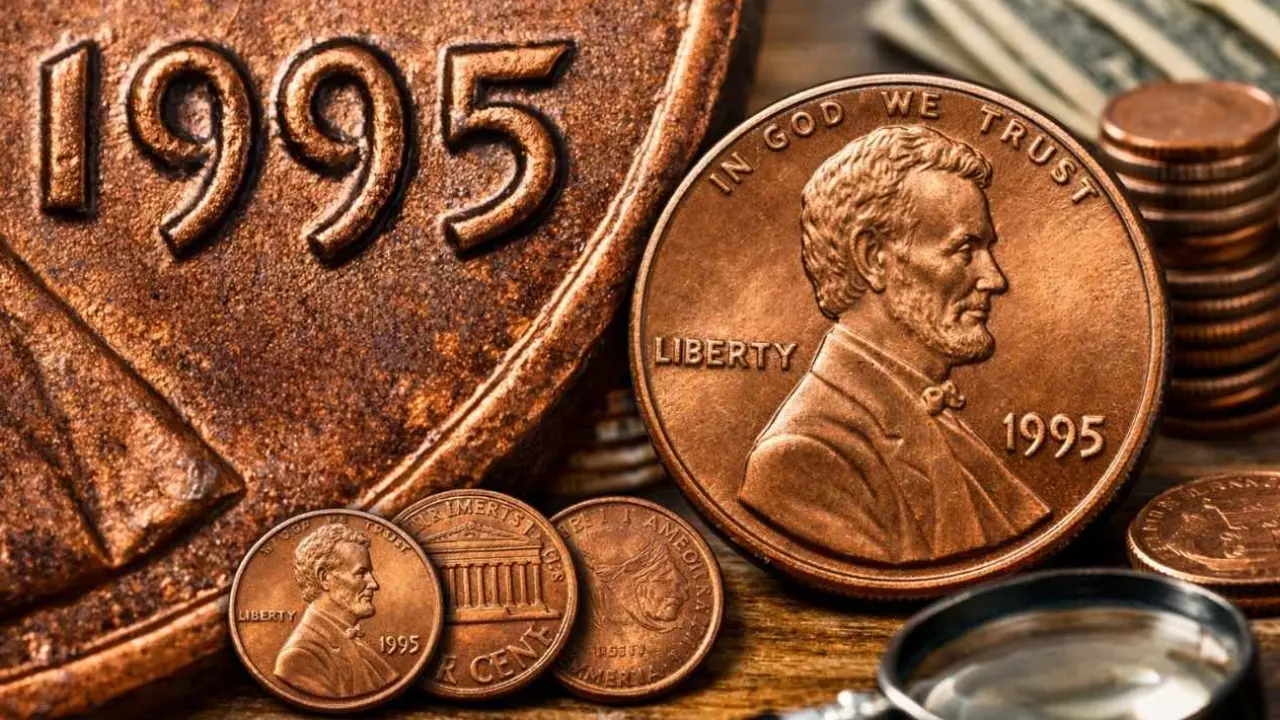
The 1995 Doubled Die Lincoln Penny represents a major mint error in modern U.S. coins. This one-cent coin features a distinctive double lettering on the obverse, making it highly sought after by coiners and coin investors. Even today, this coin commands high prices, fetching hundreds to thousands of dollars depending on condition and strike quality.
Coin Features
The 1995 Doubled Die Lincoln Penny measures 19.05mm in diameter and weighs 2.5 grams, the same as a standard Lincoln cent. The coin features a zinc core composed of 99.2 percent zinc and 0.8 percent copper plating, which is in accordance with the post-1982 penny production standard. The obverse features Abraham Lincoln’s profile, while the reverse features the Lincoln Memorial design used from 1959 to 2008.
Metal Composition
The modern 1995 Lincoln penny uses a copper-plated zinc composition, replacing the previous 95 percent copper standard. The thin copper layer provides the penny’s familiar look, while the zinc core reduces production costs. This composition impacts the coin’s preservation quality, making properly stored specimens more valuable. Doubled die errors occur during the die-making process, before the metal composition affects striking.
Rarity and Demand
The 1995 Doubled Die Lincoln penny is extremely rare, with only a small number entering circulation from the Philadelphia Mint. Collector demand consistently exceeds available supply, maintaining continued interest in the market. The visibility of errors makes authentication much easier for experienced collectors. “LIBERTY” and “IN GOD WE TRUST” exhibit strong doubling, making them a preferred quality that numismatists actively use for error coining.

Minting Details
This doubled die variety was discovered during regular penny manufacturing in 1995 at the Philadelphia Mint. This error was caused by misalignment of the hub strike during die preparation, creating the distinctive doubled look. No mintmark is visible on Philadelphia-made pennies, so proper identification requires careful examination of the doubling characteristics. An unknown quantity of error dies were produced before being removed from service.
Condition and Grading
Professional grading significantly impacts the market value of the 1995 Doubled Die Lincoln Penny. Mint State examples graded MS63 to MS67 command the highest premiums. Circulated specimens with grades ranging from Fine to Nearly Uncirculated retain considerable value due to the rarity of the variety. Strike quality, surface protection, and the absence of zinc corrosion all factor into the grading assessment. Third-party authentication by major grading services provides market confidence.

Market Value
The current market value of the 1995 Doubled Die Lincoln Penny ranges from $20 for highly circulated coins to over $400 for premium Mint State specimens. MS65-graded coins typically sell for between $150 and $250, while MS67 coins can fetch over $500. Circulated coins in Fine to Extremely Fine condition typically trade between $30 and $75. Market values fluctuate depending on copper prices, collector demand, and available supply.
Investment Potential
The 1995 Doubled Die Lincoln Penny offers good investment potential for error coin collectors. The limited remaining population supports long-term value stability and growth potential. The coin’s modern date makes it accessible to collectors building large Lincoln cent error collections. Market liquidity remains strong, with active dealer interest and collector demand. Ease of authentication reduces the concerns about counterfeit coins that plague some classic rarities.

Conclusion: 1995 Doubled Die Lincoln Penny
The 1995 Doubled Die Lincoln Penny is a fine modern mint error that collectors highly desire. Its unique doubling characteristics, low availability, and strong market demand make it consistently worthy of premium valuations. Whether seeking an error variety or building an investment-grade numismatic portfolio, this Doubled Die Penny is a great purchase. Certified high-grade examples offer the strongest combination of rarity, visual appeal, and the potential for long-term value appreciation.